고정 헤더 영역
상세 컨텐츠
본문
우리 아이, 매일 양치질은 하는데... 과연 잘하고 있는 걸까요? 많은 부모님이 고민하시는 부분입니다.
아이의 성장에 따라 구강 상태도 변하기 때문에, 나이에 맞는 칫솔질 방법과 관리가 필요합니다.
특히 어린이는 부모님의 세심한 감독이 필수적이고, 나이가 들수록 올바른 기술을 익히고 적절한 도구를 선택하는 것이 중요해집니다.
오늘 포스팅에서는 여러 연구 결과를 바탕으로 연령대별 올바른 칫솔질 가이드와 함께, 엄빠 세대가 올바른 양치방법으로 많이 배운 '회전법'에 대해서도 알려드립니다.
연령대별 칫솔질 핵심 가이드
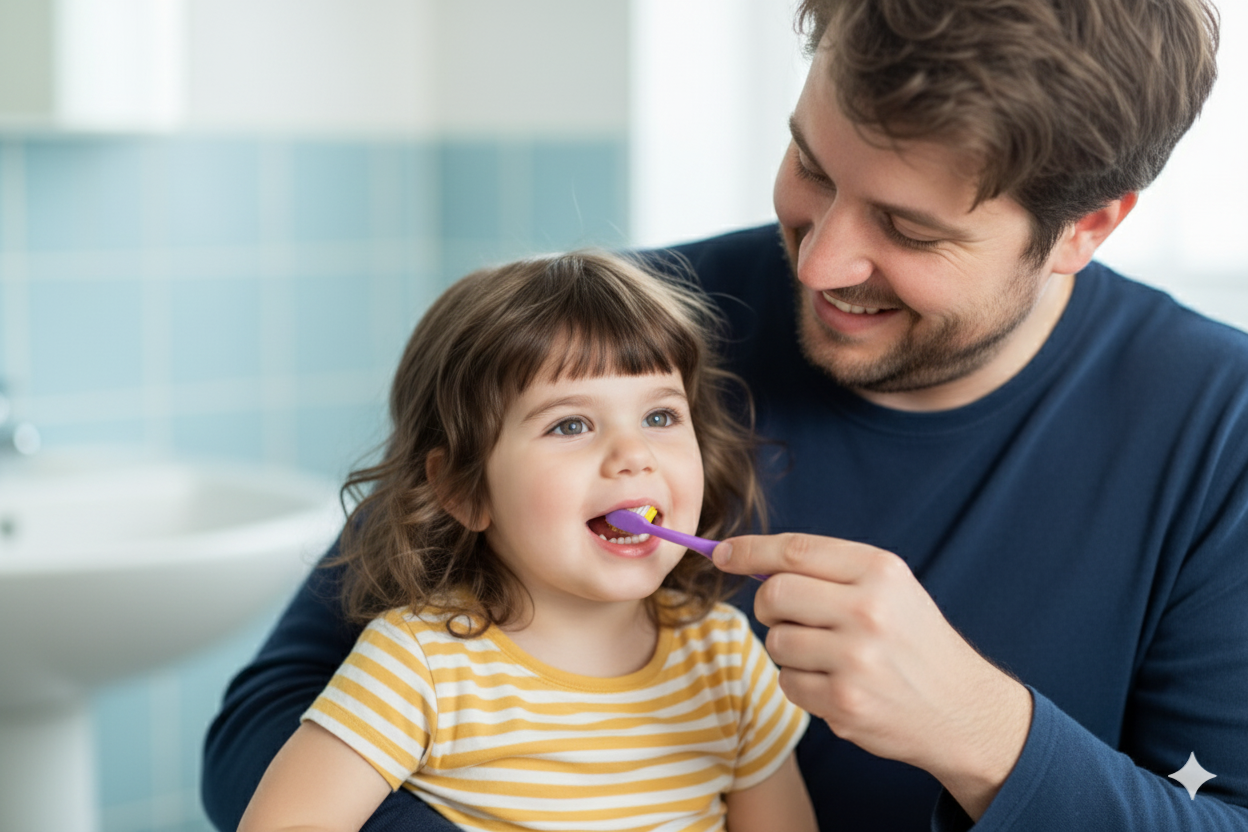
[0~3세] 부모님이 100% 직접 닦아주세요
이 시기에는 아이가 스스로 칫솔질을 할 수 없습니다. 전적으로 보호자가 직접 닦아주어야 합니다.
- 칫솔/기술: 부드러운 소형 칫솔을 사용하며, 칫솔을 치아에 대고 앞뒤로 닦는 '수평법'을 사용합니다.
- 치약: 불소치약 사용 시, '쌀알 한 톨 크기'만큼만 사용해야 합니다. 아이가 치약을 삼킬 수 있기 때문입니다
(Thornton-Evans et al., 2019; Aliakbari et al., 2020; Marshman et al., 2016).
조르단 스텝 1단계 영유아칫솔 - 유아칫솔 | 쿠팡
현재 별점 4.8점, 리뷰 39995개를 가진 조르단 스텝 1단계 영유아칫솔! 지금 쿠팡에서 더 저렴하고 다양한 유아칫솔 제품들을 확인해보세요.
www.coupang.com
[3~6세] 부모님의 감독 하에 스스로 시도해요
슬슬 아이가 스스로 칫솔질을 시도하는 시기입니다. 하지만 여전히 부모님의 적극적인 감독과 '마무리 칫솔질'이 필수적입니다.
- 칫솔/기술: 아이가 스스로 칫솔질을 하도록 격려하되, 부모님이 꼭 확인하고 다시 닦아주세요. 칫솔질 방법은 여전히 '수평법'이 효과적입니다
(Muller-Bolla & Courson, 2013). - 치약: 불소 치약은 '완두콩 한 알 크기'로 늘려줍니다
(Thornton-Evans et al., 2019; Aliakbari et al., 2020; Marshman et al., 2016).
[6~8세] 올바른 기술을 본격적으로 훈련해요
초등학교에 입학하는 이 시기에는 칫솔질 기술을 본격적으로 훈련해야 합니다. 하지만 연구에 따르면 이 나이에도 여전히 손기능과 집중력이 부족할 수 있어 부모님의 감독은 계속 필요합니다 (Pujar & Subbareddy, 2013; Chua et al., 2021; Winnier et al., 2024).
- 기술: 6~7세까지는 수평법이 가장 효과적일 수 있으나(Muller-Bolla & Courson, 2013; Patil et al., 2014), 서서히 '변형된 Bass법'(칫솔모를 잇몸 경계에 45도 각도로 대고 진동을 주듯 닦는 법)으로 전환을 시도해볼 수 있습니다.
- 치약: 치약은 완두콩 크기를 유지합니다.
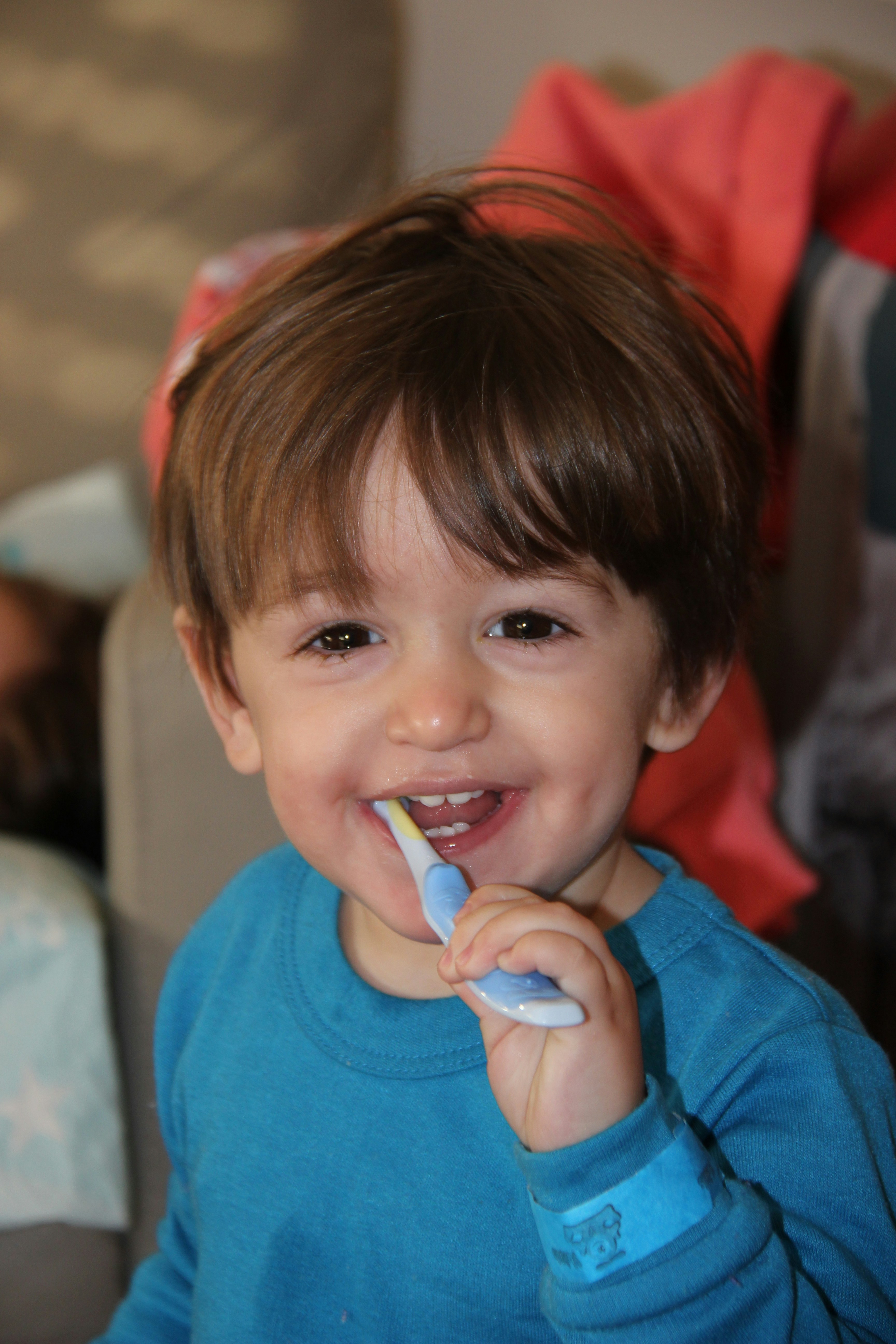
[8~12세] 독립적인 칫솔질습관을 만들어요
점차 아이가 스스로 칫솔질을 완수할 수 있게 됩니다. 하지만 부모님의 주기적인 점검은 여전히 필요합니다.
- 기술: 잇몸 건강까지 고려하는 '바스법'을 기본으로 하고, 폰즈법이나 수평법을 혼합하여 사용할 수 있습니다
(Muller-Bolla & Courson, 2013; Pujar & Subbareddy, 2013). - 도구: 이 시기부터는 전동칫솔 사용도 좋은 선택이 될 수 있습니다. 실제로 6~12세 아동을 대상으로 한 연구에서 전동칫솔이 플라그 제거에 더 효과적이라는 결과도 있습니다
(K & R, 2025; Petrukhina et al., 2021; Petrukhina et al., 2022).
[12세 이상 ~ 성인] 완성된 구강 관리가 필요해요
이제 완전히 자립하여 스스로 구강 관리를 하는 시기입니다. 올바른 습관이 잡혔는지 정기적인 치과 검진이 중요합니다.
- 기술: '바스법'을 기본으로 꼼꼼히 닦습니다.
- 도구: 전동칫솔 사용이 플라그 제거에 더 효과적일 수 있어 권장됩니다
(K & R, 2025; Petrukhina et al., 2021; Petrukhina et al., 2022; Weik et al., 2020). - 특이사항: 칫솔질만으로는 부족한 치아 사이 관리를 위해 '치실' 사용을 반드시 병행해야 합니다
(Pujar & Subbareddy, 2013; Deinzer et al., 2019).
[심화 학습] 회전법 (Rolling Method)은 어떤가요?
'회전법'은 칫솔을 잇몸에서 치아 방향으로 쓸어내리듯 손목을 돌려 닦는 방법입니다. 많은 분이 이 방법을 사용하시는데요, 연구 결과는 어떨까요?
- 치태 제거 및 잇몸 건강: 회전법은 분명히 치태(플라그) 제거와 잇몸 건강 개선에 효과적인 방법입니다. 여러 연구에서 회전법 교육 후 구강 위생 지수가 개선된 것이 확인되었습니다
(Sarwendah et al., 2024; Citradi et al., 2022; Alavi et al., 2024; Kim et al., 2015). - 다른 방법과 비교: 회전법은 배우기 쉽다는 장점이 있지만, 위에서 언급된 '바스법'과 비교했을 때 잇몸 경계 부위의 치태 제거 효과는 Bass법이 더 우수할 수 있습니다. 전반적인 치태 제거 효과는 두 방법 간에 큰 차이가 없다는 연구 결과도 있습니다
(Weng et al., 2023; Gibson & Wade, 1977; Deinzer et al., 2024). - 결론: 회전법은 배우기 쉽고 분명히 효과적인 칫솔질 방법입니다. 하지만 잇몸 건강이 특별히 우려된다면 '바스법'으로 양치하는 것이 더 유리할 수 있습니다. 개인의 구강 상태와 배우기 쉬운 정도를 고려해 적합한 방법을 선택하는 것이 중요합니다.
꼭 기억해야 할 칫솔질 꿀팁 4가지
어떤 칫솔질 방법을 선택하든, 아래 4가지 기본 원칙은 꼭 지켜주세요.
- 부모님 감독, 8~10세까지는 필요해요! 많은 부모님이 '몇 살부터 혼자 닦게 둬도 될까?' 고민합니다. 연구에 따르면 8~10세까지는 아이들의 손기능과 집중력이 부족할 수 있습니다. 6세 이상은 되어야 효과적인 칫솔질이 가능하다는 연구 결과도 있으니, 그전까지는 부모님의 적극적인 감독과 도움이 필수입니다
(Pujar & Subbareddy, 2013; Chua et al., 2021; Aliakbari et al., 2020; Marshman et al., 2016; Winnier et al., 2024). - 전동칫솔, 6세 이상부터 효과적이에요! 전동칫솔 사용을 고민 중이시라면 6세 이후를 추천합니다. 6세 이상 아동에게는 전동칫솔이 수동칫솔보다 플라그 제거에 더 효과적이라는 연구 결과가 있습니다
(K & R, 2025; Petrukhina et al., 2021; Petrukhina et al., 2022). - 칫솔질 시간은 '하루 2번, 2분 이상'이 기본! 기본은 '하루 2번, 2분 이상'입니다. 실제 연구에서도 나이가 들수록 칫솔질 시간과 효과(구강 청결도)가 함께 증가하는 경향을 보였습니다
(Pujar & Subbareddy, 2013; Deinzer et al., 2019; Gupta et al., 2024; Honkala et al., 2015). - 불소 치약, 양 조절은 필수예요! 불소는 충치 예방에 효과적이지만, 삼키면 안 좋습니다. 특히 치약을 삼킬 수 있는 3세 미만은 '쌀알 크기', 3~6세는 '완두콩 크기'를 꼭 지켜주세요. 6세 이상부터는 일반적인 양을 사용해도 좋습니다
(Thornton-Evans et al., 2019; Aliakbari et al., 2020).
결론
아이의 구강 건강은 '백년대계'라는 말이 있습니다. 어릴 때부터 올바른 칫솔질 습관을 들이는 것이 평생의 치아 건강을 좌우합니다.
오늘 알려드린 내용을 바탕으로 아이의 성장에 맞춰 칫솔질 방법과 도구, 그리고 부모님의 감독 수준을 조절해 주시고, 올바른 습관을 함께 만들어가시길 바랍니다.
[참고문헌]
Alavi, A., Nicoo, M., & Nikou, F. (2024). Comparison of Plaque Index and Bleeding Index in Using Soft and Medium Toothbrushes with the Rolling Method. Hormozgan Medical Journal. https://doi.org/10.34172/hmj.8427
Aliakbari, E., Gray-Burrows, K., Vinall-Collier, K., Edwebi, S., Marshman, Z., McEachan, R., & Day, P. (2020). Home-based toothbrushing interventions for parents of young children to reduce dental caries: A systematic review.. International journal of paediatric dentistry. https://doi.org/10.1111/ipd.12658
Almujadi, A., & Sutrisno, S. (2017). PENGARUH PROMOSI MENYIKAT GIGI TERHADAP SKOR PLAK DI SEKOLAH DASAR KANDANGAN II, SEYEGAN, SLEMAN, YOGYAKARTA. **, 3, 6-10.
Bastiaan, R. (1984). Comparison of the clinical effectiveness of a single and a double headed toothbrush.. Journal of clinical periodontology, 11 5, 331-9. https://doi.org/10.1111/j.1600-051x.1984.tb01329.x
Chua, D., Hu, S., Sim, Y., Wanyi, L., Lai, B., & Hong, C. (2021). At what age do children have the motor development to adequately brush their teeth?. International journal of paediatric dentistry. https://doi.org/10.1111/ipd.12938
Citradi, J., Hatta, I., & Azizah, A. (2022). THE EFFECTIVENESS OF THE ROLL TOOTH-BRUSHING TECHNIQUE TOWARD GINGIVAL HEALTH STATUS OF TOTALLY BLIND PEOPLE. Dentino : Jurnal Kedokteran Gigi. https://doi.org/10.20527/dentino.v7i1.13094
Deinzer, R., Cordes, O., Weber, J., Hassebrauck, L., Weik, U., Krämer, N., Pieper, K., & Margraf-Stiksrud, J. (2019). Toothbrushing behavior in children – an observational study of toothbrushing performance in 12 year olds. BMC Oral Health, 19. https://doi.org/10.1186/s12903-019-0755-z
Deinzer, R., Weik, U., Eidenhardt, Z., Leufkens, D., & Sälzer, S. (2024). Manual toothbrushing techniques for plaque removal and the prevention of gingivitis—A systematic review with network meta-analysis. PLOS ONE, 19. https://doi.org/10.1371/journal.pone.0306302
Gibson, J., & Wade, A. (1977). Plaque removal by the Bass and Roll brushing techniques.. Journal of periodontology, 48 8, 456-9. https://doi.org/10.1902/jop.1977.48.8.456
Gupta, R., Kothadia, R., Haider, S., Mazumder, A., Akhter, F., Siddika, N., & Apu, E. (2024). Toothbrushing frequency among children and adolescents in 72 countries: Findings from the Global School-based Student Health Survey.. Dental and medical problems, 61 4, 495-506. https://doi.org/10.17219/dmp/185842
Honkala, S., Vereecken, C., Niclasen, B., & Honkala, E. (2015). Trends in toothbrushing in 20 countries/regions from 1994 to 2010.. European journal of public health, 25 Suppl 2, 20-3. https://doi.org/10.1093/eurpub/ckv013
K, A., & R, R. (2025). Comparative Evaluation of Plaque Removal Efficiency of Electric, Manual, and Sonic Toothbrushes in Children Aged 6 To 12 Years: A Randomized Controlled Trial. Journal of Neonatal Surgery. https://doi.org/10.52783/jns.v14.1989
Kim, C., Kim, G., Lee, J., Kwon, H., & Kim, B. (2015). A comparison of tooth brushing methods recommended in different countries. Journal of Korean Academy of Oral Health, 39, 195-200. https://doi.org/10.11149/jkaoh.2015.39.3.195
Li, Z. (2003). Application of Different Methods of Toothbrushing and Dental Floss in Control of Dental Plaque. **.
Marshman, Z., Ahern, S., McEachan, R., Rogers, H., Gray-Burrows, K., & Day, P. (2016). Parents’ Experiences of Toothbrushing with Children. JDR Clinical & Translational Research, 1, 122 - 130. https://doi.org/10.1177/2380084416647727
Muller-Bolla, M., & Courson, F. (2013). Toothbrushing methods to use in children: a systematic review.. Oral health & preventive dentistry, 11 4, 341-7. https://doi.org/10.3290/j.ohpd.a30602
Patil, S., Patil, P., & Kashetty, M. (2014). Effectiveness of different tooth brushing techniques on the removal of dental plaque in 6–8 year old children of Gulbarga. Journal of International Society of Preventive & Community Dentistry, 4, 113 - 116. https://doi.org/10.4103/2231-0762.138305
Petrukhina, N., Boriskina, O., & Shevlyakov, D. (2021). [Clinical analysis of the cleaning effectiveness of toothbrushes of various types in children aged 6-15 years after a single brushing].. Stomatologiia, 100 6, 76-81. https://doi.org/10.17116/stomat202110006176
Petrukhina, N., Boriskina, O., & Shevlyakov, D. (2022). Clinical evaluation of the cleansing effectiveness various types toothbrushes used by adolescents 12—15 years old. Stomatology for All / International Dental review. https://doi.org/10.35556/idr-2022-1(98)58-63
Pujar, P., & Subbareddy, V. (2013). Evaluation of the tooth brushing skills in children aged 6–12 years. European Archives of Paediatric Dentistry, 14, 213 - 219. https://doi.org/10.1007/s40368-013-0046-3
Sarwendah, S., Reza, E., Renita, I., & Wira, N. (2024). DESCRIPTION OF TOOTH-BRUSHING BEHAVIOR BEFORE AND AFTER COUNSELING WITH ROLLING TECHNIQUE IN SDN MELONG ASIH CIMAHI. Journal of Health and Dental Sciences. https://doi.org/10.54052/jhds.v3n3.p281-290
Sriani, Y., Aljufri, A., Yuzar, Y., Herawati, N., & Lisnayetti, L. (2023). DIFFERENCES IN HYGIENE INDEX OF BRUSHING TEETH WITH HORIZONTAL, ROLL AND FONE'S METHOD IN CHILDREN AGED 9-12 YEARS. JDHT Journal of Dental Hygiene and Therapy. https://doi.org/10.36082/jdht.v4i2.1259
Thornton-Evans, G., Junger, M., Lin, M., Wei, L., Espinoza, L., & Beltrán-Aguilar, E. (2019). Use of Toothpaste and Toothbrushing Patterns Among Children and Adolescents — United States, 2013–2016. Morbidity and Mortality Weekly Report, 68, 87 - 90. https://doi.org/10.15585/mmwr.mm6804a3
Weik, U., Cordes, O., Weber, J., Krämer, N., Pieper, K., Margraf-Stiksrud, J., & Deinzer, R. (2020). Toothbrushing Performance and Oral Cleanliness after Brushing in 12-Year-Old Children. JDR Clinical and Translational Research, 7, 71 - 79. https://doi.org/10.1177/2380084420975333
Weng, L., Wen, J., Cui, G., Liang, J., Pang, L., & Lin, H. (2023). Comparison of modified Bass, Rolling, and current toothbrushing techniques for the efficacy of plaque control - A randomized trial.. Journal of dentistry, 104571. https://doi.org/10.1016/j.jdent.2023.104571
Winnier, J., Naik, S., Shetty, A., Patil, D., Tandel, S., & Gore, P. (2024). Impact of manual dexterity on toothbrushing efficacy in typically developing children: A cross-sectional study.. International journal of paediatric dentistry. https://doi.org/10.1111/ipd.13260
※ 이 포스팅은 쿠팡 파트너스 활동의 일환으로, 이에 따른 일정액의 수수료를 제공받습니다.
'우리 가족 구강관리' 카테고리의 다른 글
| 우리 아기 첫니! 젖니 나는 시기, 순서, 이앓이 증상 (0) | 2025.10.24 |
|---|---|
| 아이 치아가 깨졌어요! 이렇게 하세요 (0) | 2025.10.23 |
| 구강유산균(프로바이오틱스), 정말 효과 있을까? (0) | 2025.10.20 |
| 아기에게 뽀뽀로 충치균이 옮겨갈 수 있을까 (0) | 2025.10.19 |
| 월령별 우리아이 치아 관리법(0~36개월) (0) | 2025.10.19 |


